Telomeres are the biological clock of aging, and their preservation is one of the most promising areas of longevity research
Despite this, its biological effects on gene expression and telomerase activation persist for extended periods, suggesting a hit-and-run mechanism where transient peptide exposure triggers sustained downstream signaling
This BPC-157 10MG product page is intended to provide educational, research-only information focused on compound classification, scientific context, and non-clinical investigation
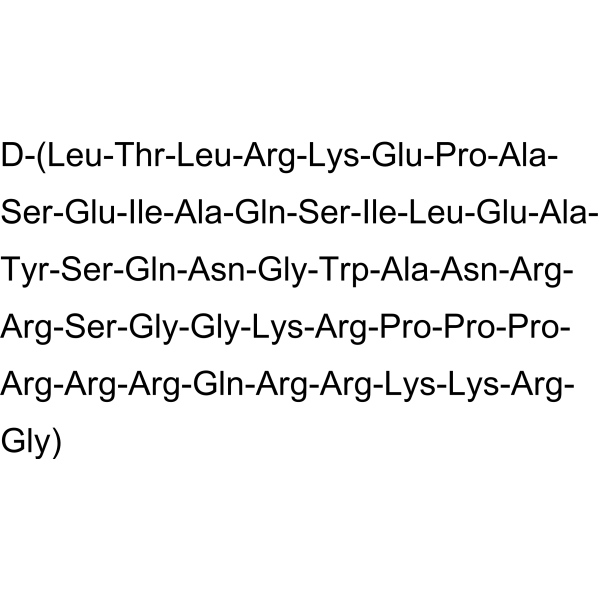
Molecular Characteristics Molecular Type: Synthetic pentadecapeptide research compound Structure: Linear peptide chain (15 amino acids) Stability: High when stored under recommended laboratory conditions Molecular Weight: Sequence-dependent Molecular Stability and Storage Profile Supplied as a lyophilized powder for enhanced long-term stability Long-term storage: Store at 20C to preserve molecular integrity Sensitive to moisture and prolonged light exposure Predictable degradation above room temperature Reconstituted solutions remain stable for approximately 2448 hours under refrigeration Solubility and Reconstitution Characteristics Bacteriostatic water Sterile saline Acidic buffers Compatible analytical-grade organic solvents Technical Specifications product Name BPC-157 10mg cas 137525-51-0 purity 99% (HPLC verified) unit Size 10 mg vial form Lyophilized powder synthesis Solid-Phase Peptide Synthesis (SPPS) analytical HPLC, Mass Spectrometry, UV Spectrophotometry molecular Structure Linear peptide chain stability High when stored under recommended conditions Analytical Validation and Quality Assurance High-Performance Liquid Chromatography (HPLC) purity confirmation Mass Spectrometry (MS) molecular identity and sequence verification UV spectrophotometric concentration analysis Batch identity and consistency verification Endotoxin and microbial contamination screening Regulatory and Compliance Statement BPC-157 10mg is supplied strictly for laboratory research and scientific investigation
Insomnia model establishment The insomnia model was established by PCPA at a dose of 300 mg/kg via i.p